1
/
of
3
Platy & Co
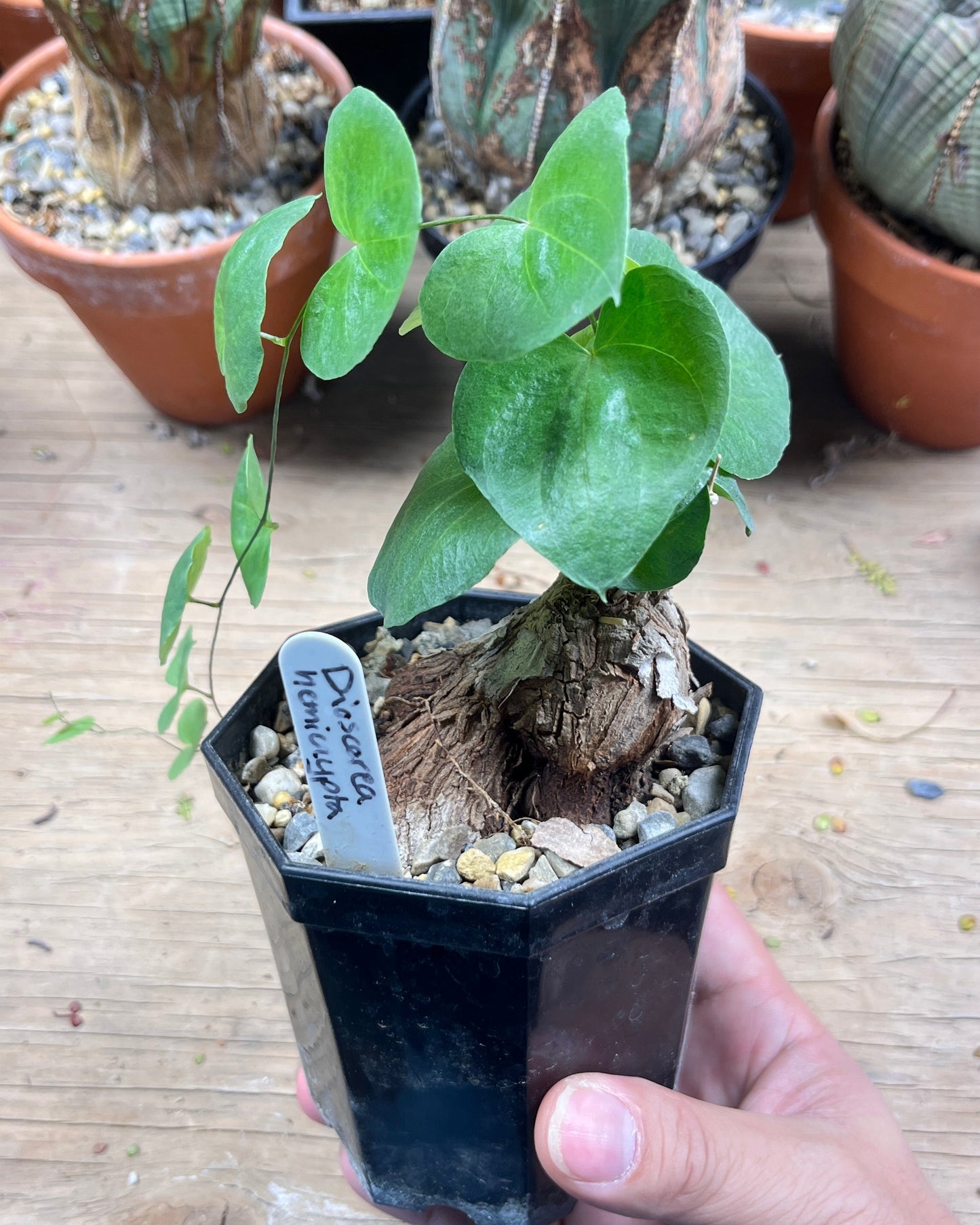
Dioscorea hemicrypta - The Underground Magician's Greatest Trick
Regular price
$95.00 CAD
Regular price
Sale price
$95.00 CAD
Unit price
/
per
Shipping calculated at checkout.
Couldn't load pickup availability
There are plants that grow above ground and announce themselves to the world. There are plants that hide completely underground until their moment arrives. And then there's Dioscorea hemicrypta - the botanical equivalent of a magician who performs half the trick in plain sight and keeps the best part hidden beneath the stage.
Picture this: you're walking through the dry, stony slopes of South Africa's Little Karoo, scanning the landscape for something interesting. The terrain looks barren, scattered with rocks and scrubby vegetation that all blends into the same dusty palette. Then you catch a glimpse of something that doesn't quite belong - leaves with an unusual bluish-green tint that seems to glow against the muted background. You've just spotted the only visible clue to one of nature's most elaborate underground productions.
What you're seeing is merely the opening act. Below ground, hidden from view like a magician's secret compartment, lies the real star of the show: a corky, elephant-foot caudex that's been quietly growing and thickening for years, maybe decades. This isn't just a root system - it's a living storage vault, a botanical time capsule, a sweet potato that decided to become a work of art.
The name "hemicrypta" literally means "half-hidden," and it's the perfect description for a plant that lives in two worlds simultaneously. Above ground, delicate vines emerge like green ribbons, reaching for something to climb, something to embrace. They'll wrap around nearby shrubs or cascade gracefully if given the chance, creating an elegant display that seems almost too refined for such harsh terrain. But this aerial performance is temporary, seasonal, ephemeral.
The real magic happens underground, where the caudex slowly transforms from a simple tuber into something that resembles ancient, weathered sculpture. The surface develops deep corky ridges and valleys, creating textures that look like they were carved by wind and time rather than grown by cellular division. Each year adds another layer to this underground masterpiece, another chapter to a story that unfolds in geological time.
But here's where the magician's timing becomes crucial: the vine knows exactly when to appear and when to vanish. During South Africa's winter months, when most plants are dormant, hemicrypta springs into action. The vines emerge with fresh energy, climbing and growing with purpose, as if they know their time is limited. They photosynthesize frantically, storing energy in that hidden caudex like squirrels preparing for a long winter.
Then, as summer approaches and the landscape becomes truly harsh, the vine performs its greatest disappearing act. It simply vanishes, dying back completely, leaving no trace above ground except perhaps some dried stems that crumble to dust. To the casual observer, the plant has ceased to exist. But underground, the caudex sits patiently, living off stored resources, waiting for the next cool season to begin the cycle again.
In cultivation, this underground magician brings its mysterious charm to container growing, where the caudex can be partially exposed like a performer taking a bow. Growers often start with the caudex buried, allowing it to develop size and strength in secret. Then, gradually, they lift it above the soil line, revealing the corky, sculptural beauty that was hidden all along. It's like watching a time-lapse revelation of artistic creation.
Care Requirements:
•Light: Bright, indirect light that mimics the filtered sun of its native scrubland
•Water: Moderate during winter growth, minimal during summer dormancy - follow the
plant's natural rhythm
•Soil: Extremely well-draining cactus mix that prevents the underground treasure from
rotting
•Temperature: Cool winters for active growth, warm summers for dormancy - hardy to 25°F
•Support: Provide climbing structure for the seasonal vine performance
•Patience: The best caudex development happens slowly, over years of careful cultivation
Share
No reviews